
Introduction
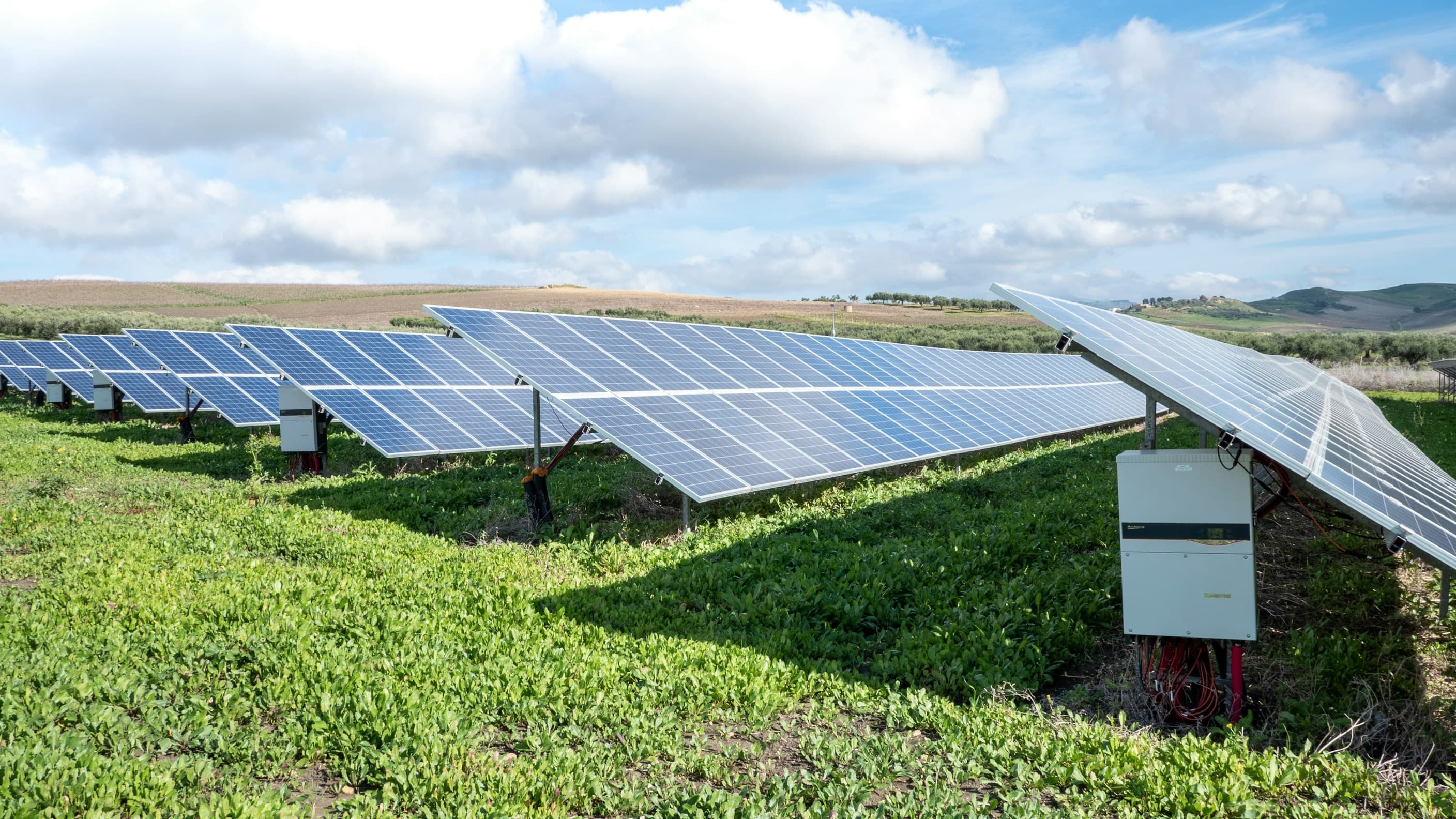
The investment world is changing. For years, traditional markets have revolved around speculation, from volatile crypto cycles to high-risk stock trading. But smart investors are moving beyond speculation into real-world assets (RWAs) - physical investments that generate real economic value.
At the same time, green investing is becoming a priority for those looking to earn returns while making a positive environmental impact. The fusion of RWAs and blockchain technology is unlocking new opportunities, allowing everyday investors to own a stake in sustainable energy projects while benefiting from passive income and price appreciation.
What Are Real-World Assets (RWA) and How Does Tokenization Work?
Real-World Assets refer to tangible, income-generating assets, such as real estate, infrastructure, commodities, and renewable energy projects. Tokenization is the process of digitizing these assets on a blockchain, allowing for fractional ownership, increased liquidity, and greater accessibility.
-
Before tokenization: Investing in solar farms or large-scale infrastructure was restricted to institutional investors with significant capital.
-
After tokenization: Individuals can now own a fraction of a solar farm, earn passive income from energy production, and trade their shares easily.
Key Benefits of RWA Tokenization:
- Fractional Ownership – Invest in high-value assets with smaller amounts.
- Liquidity – Unlike traditional energy investments, tokenized assets can be traded more easily.
- Transparency – Blockchain ensures secure, tamper-proof ownership records.
- Passive Income – Investors receive returns based on real-world energy production.
Why RWAs Matter for Green Investing
Sustainable investing is more than just ESG scores - it’s about owning real assets that directly contribute to environmental impact. Tokenized solar energy investments enable anyone to participate in the green energy transition.
Direct Investment in Clean Energy - Your capital funds real solar farms, helping reduce reliance on fossil fuels.
Long-Term Stability - Unlike speculative assets, energy production is constant and demand-driven.
Impact Transparency - Investors can track energy production and earnings in real time on the blockchain.
Did you know? The global renewable energy market is projected to grow from $881 billion in 2020 to over $1.9 trillion by 2030—and tokenization is making it easier than ever to be part of it.
How SolarShare Makes RWA Investing Simple
SolarShare is pioneering the tokenization of solar energy investments, making it easy for anyone to own a share of a real solar farm and earn passive income from clean energy production.
How It Works:
- Solar Farms Are Tokenized – SolarShare acquires real solar projects and represents individual solar panels as NFTs.
- Investors Own a Fraction of Energy Production – Buying a SolarShare NFT means you own part of the farm and earn from the energy it generates.
- Automatic Passive Income – Smart contracts distribute revenue from energy sales to investors in stable USDT tokens.
Security & Transparency Measures:
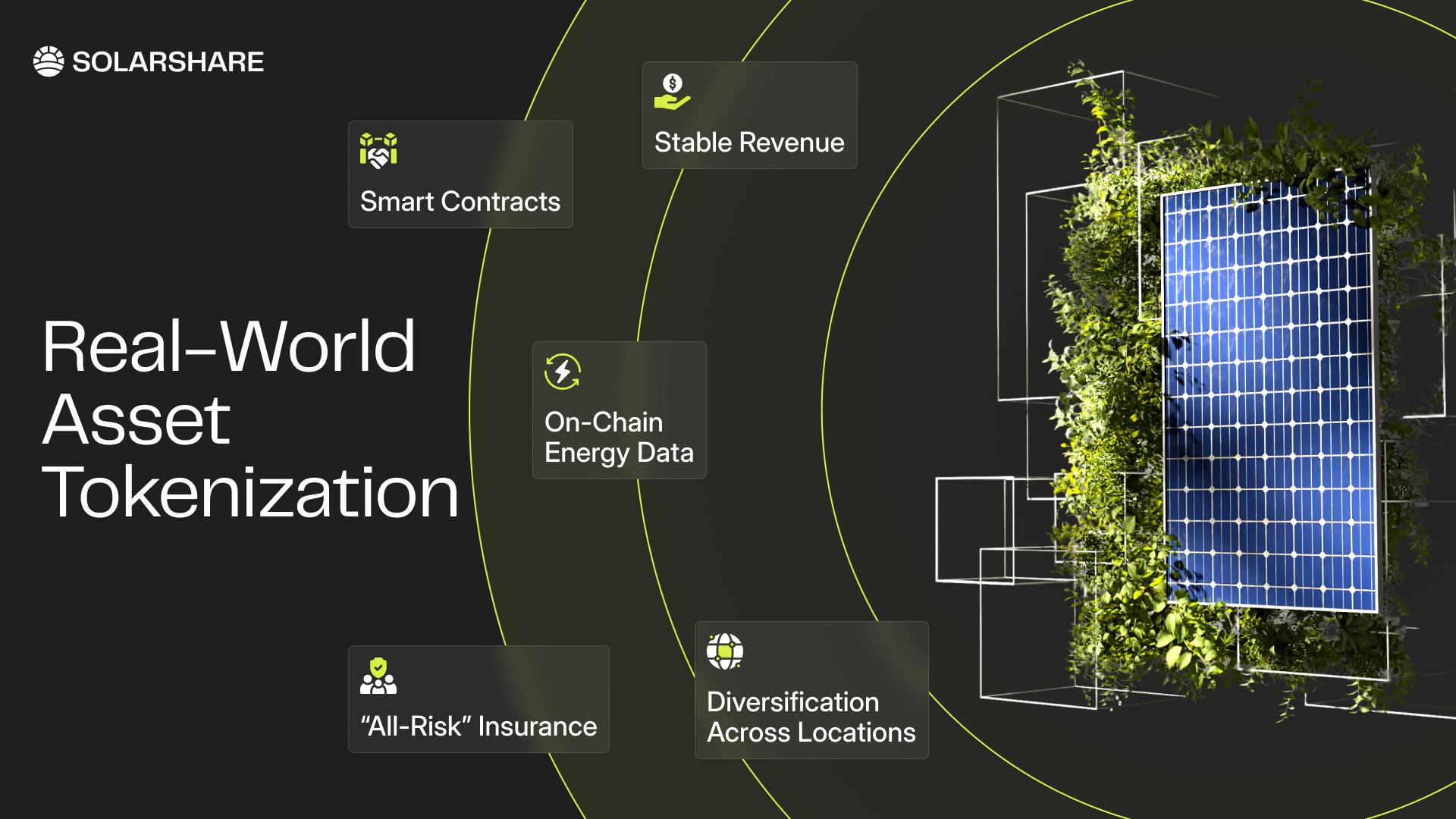
- Smart Contracts ensure automated, trustless profit distribution.
- “All Risk” Insurance protects solar farms against operational failures.
- On-Chain Energy Data provides real-time insights into energy production and earnings.
- Diversification Across Locations reduces risks related to local regulations or environmental factors.
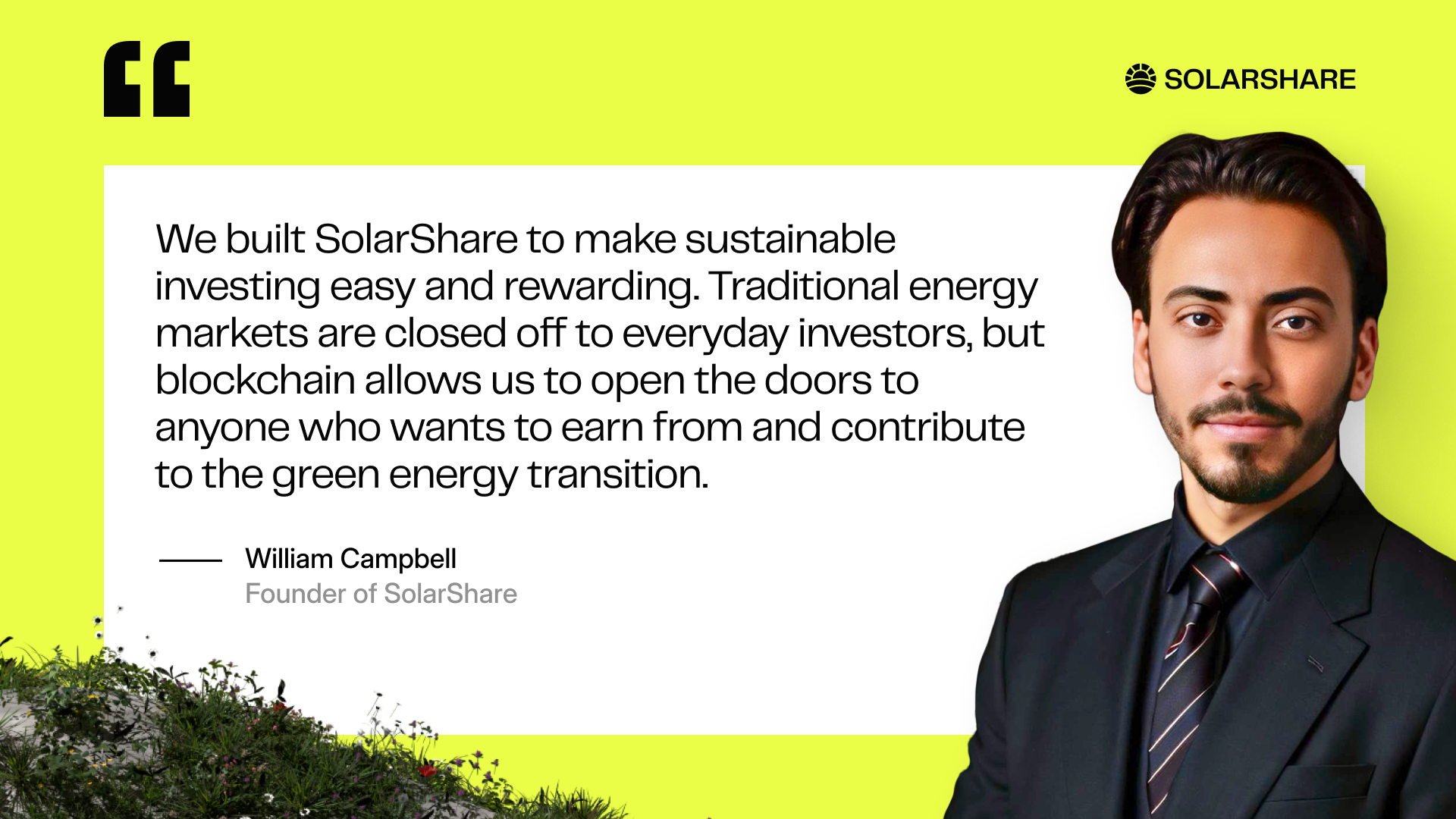
William’s Vision: Why He Co-Founded SolarShare
What Investors Should Know
Like any investment, RWA tokenization in renewable energy carries risks. Here’s how SolarShare mitigates key challenges:
- Regulatory Compliance – Constant legal monitoring and adaptability to changing regulations.
- Insurance & Maintenance – All farms are insured, and regular maintenance ensures optimal energy production.
- Liquidity & Market Conditions – Capital reserves and diversified projects help manage market fluctuations.
- Weather & Energy Prices – Solar farm locations are chosen based on high solar irradiation and stable energy markets.
As with any investment, it’s important to do your research and understand the risks involved. SolarShare is committed to transparency, security, and long-term sustainability for its investors.
The Future of Green Investing
The combination of RWAs and tokenization is transforming green investing - making it more accessible, transparent, and financially rewarding. As tokenized assets reshape traditional industries, investing in real-world energy projects provides an opportunity to build wealth while making a real impact.
SolarShare is leading the charge - offering passive income from tokenized solar energy!